DINOv2: How self-supervised visual features transfer across tasks

A practical guide to "DINOv2: Learning Robust Visual Features without Supervision"
article cover

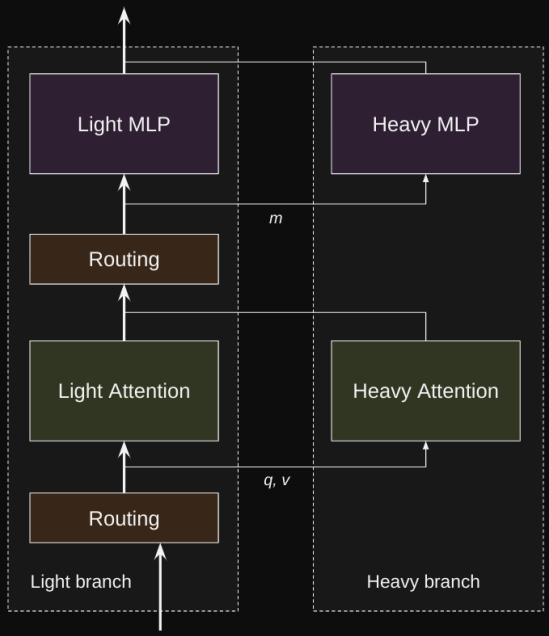
DINOv2 trains Vision Transformer encoders on 142 million curated images without using labels or captions in its pretraining objective. This guide explains how image-level self-distillation, masked patch prediction, feature-spreading regularization, data curation, and distillation combine to produce features that transfer across classification, retrieval, segmentation, and depth estimation.

View comments.

more ...

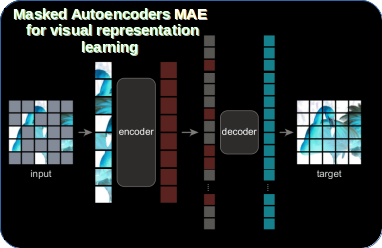
🎭 Masked autoencoder (MAE) for visual representation learning. From the author of ResNet.

"Masked Autoencoders Are Scalable Vision Learners" - Research Paper Explained
article cover

A masked autoencoder (MAE) learns visual representations by reconstructing missing image patches from a small visible subset. It divides an image into regular non-overlapping patches, samples patches uniformly without replacement, removes the masked patches before the encoder, and inserts learned mask tokens only for the lightweight decoder. With a 75% masking ratio, the encoder processes just 25% of the patches. This asymmetric design reduces training time and memory, enabling ViT-Large and ViT-Huge models to scale on ImageNet-1K. A ViT-Huge model pretrained for 1600 epochs and fine-tuned at 448-pixel resolution reaches 87.8% ImageNet-1K top-1 accuracy.

View comments.

more ...

Decision Transformer: Unifying sequence modelling and model-free, offline RL

"Decision Transformer: Reinforcement Learning via Sequence Modeling" - Research Paper Explained
article cover

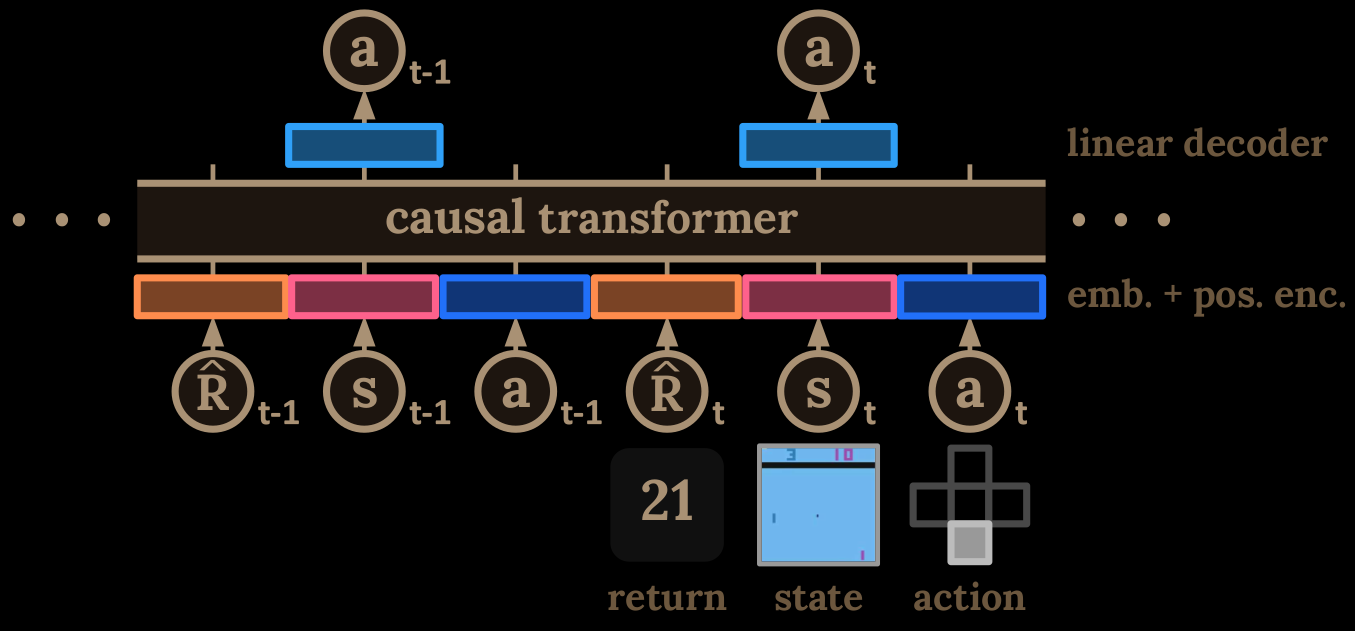
Decision Transformer casts offline reinforcement learning (RL) as conditional sequence modeling. A causally masked GPT-style Transformer predicts each action from a desired return-to-go, the current state, and the recent trajectory. It avoids value-function bootstrapping and policy-gradient optimization during training, yet matches or exceeds several strong offline RL baselines on the benchmarks studied in the paper.

View comments.

more ...

MLP-Mixer: MLP is all you need... again? ...

"MLP-Mixer: An all-MLP Architecture for Vision" - Research Paper Explained
article cover

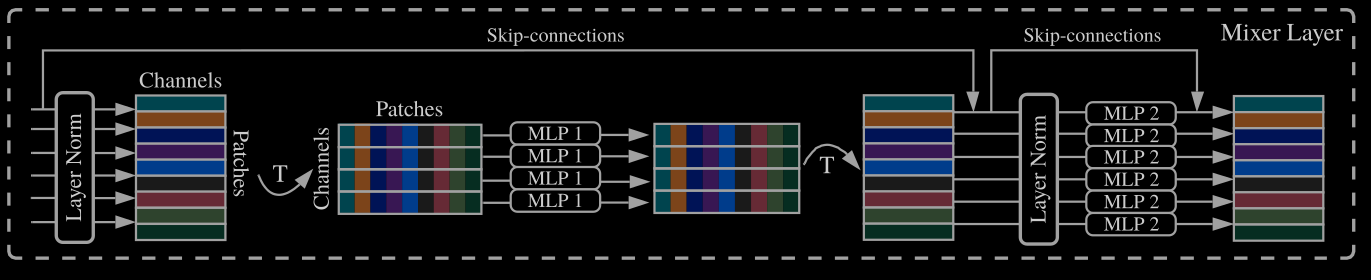
Let's try to answer the question: is it enough to have the FFN MLP, with matrix multiplication routines and scalar non-linearities to compete with modern architectures such as ViT or CNNs? No need for convolution, attention? It sounds that we have been here in the past. However, does it mean that the researchers are lost and go rounding in circles? It turns out that what has changes along the way is the increase in the scale of the resources and the data which originally helped ML and especially DL flourish past 5-7 years ago. We will discuss the paper which proves that MLP based solutions can replace CNN and attention based Transformers with comparable scores at image classification benchmarks and at pre-training/inference costs similar to SOTA models.

View comments.

more ...

DINO: Improving supervised ViT with richer learning signal from self-supervision

"Emerging Properties in Self-Supervised Vision Transformers" - Research Paper Explained
article cover

Self-DIstillation with NO labels (DINO) is a self-supervised method based on Vision Transformer (ViT) from Facebook AI with the ability to learn representation from unlabeled data. The architecture is able to learn automatically class-specific features, allowing the unsupervised object segmentation. The paper claims that the self-supervised methods adapted to ViT not only works very well, but one can also observe that the self-supervised ViT features contain explicit semantic segmentation information of an image, which is not that clear in case of supervised ViT, nor with convnets. The benefit of such observation is that such features are also very good k-NN classifiers. The performance results are reported to be highly dependent on two SSL approaches: the momentum teacher and multicrop training. In this blog post we will explain the details on what DINO is all about.

View comments.

more ...

RL Primer

Explaining the fundamental concepts of Reinforcement Learning
article cover

The objective of RL is to maximize the reward of an agent by taking a series of actions in response to a dynamic environment. Breaking it down, the process of Reinforcement Learning involves these simple steps: Observation of the environment, deciding how to act using some strategy, acting accordingly

View comments.

more ...

ERNIE 2.0: A continual pre-training framework for language understanding

article cover

ERNIE 2.0 (Enhanced Representation through kNowledge IntEgration), a new knowledge integration language representation model that aims to beat SOTA results of BERT and XLNet. While pre-training with more than just several simple tasks to grasp the co-occurrence of words or sentences for language modeling, Ernie aims to explore named entities, semantic closeness and discourse relations to obtain valuable lexical, syntactic and semantic information from training corpora. Ernie 2.0 focus on building and learning incrementally pre-training tasks through constant multi-task learning. And it brings some interesting results.

View comments.

more ...

NLP: Explaining Neural Language Modeling

article cover

Language modeling (LM) is the essential part of Natural Language Processing (NLP) tasks such as Machine Translation, Spell Correction Speech Recognition, Summarization, Question Answering, Sentiment analysis etc. Goal of the Language Model is to compute the probability of sentence considered as a word sequence. This article explains how to model the language using probability and n-grams. It also discuss the language model evaluation with use of perplexity.

View comments.

more ...

The Transformer – Attention is all you need.

article cover

Transformer - more than meets the eye! Are we there yet? Well... not really, but...
How about eliminating recurrence and convolution from transduction? Sequence modeling and transduction (e.g. language modeling, machine translation) problems solutions has been dominated by RNN (especially gated RNN) or LSTM, additionally employing the attention mechanism. Main sequence transduction models are based on RNN or CNN including encoder and decoder. The new transformer architecture is claimed however, to be more parallelizable and requiring significantly less time to train, solely focusing on attention mechanisms.

View comments.

more ...

Neural Networks Primer

article cover

When you approach a new term you often find some Wiki page, Quora answers blogs and it sometimes might take some time before you find the true ground up, clear definition with meaningful example. I will put here the most intuitive explanations of basic topics. Due to extended nature of aspects and terms that are used across NN area, in this post I will place condensed definitions and a brief explanations – just to understand the intuition of terms that are mentioned in other posts along this blog.

View comments.

more ...